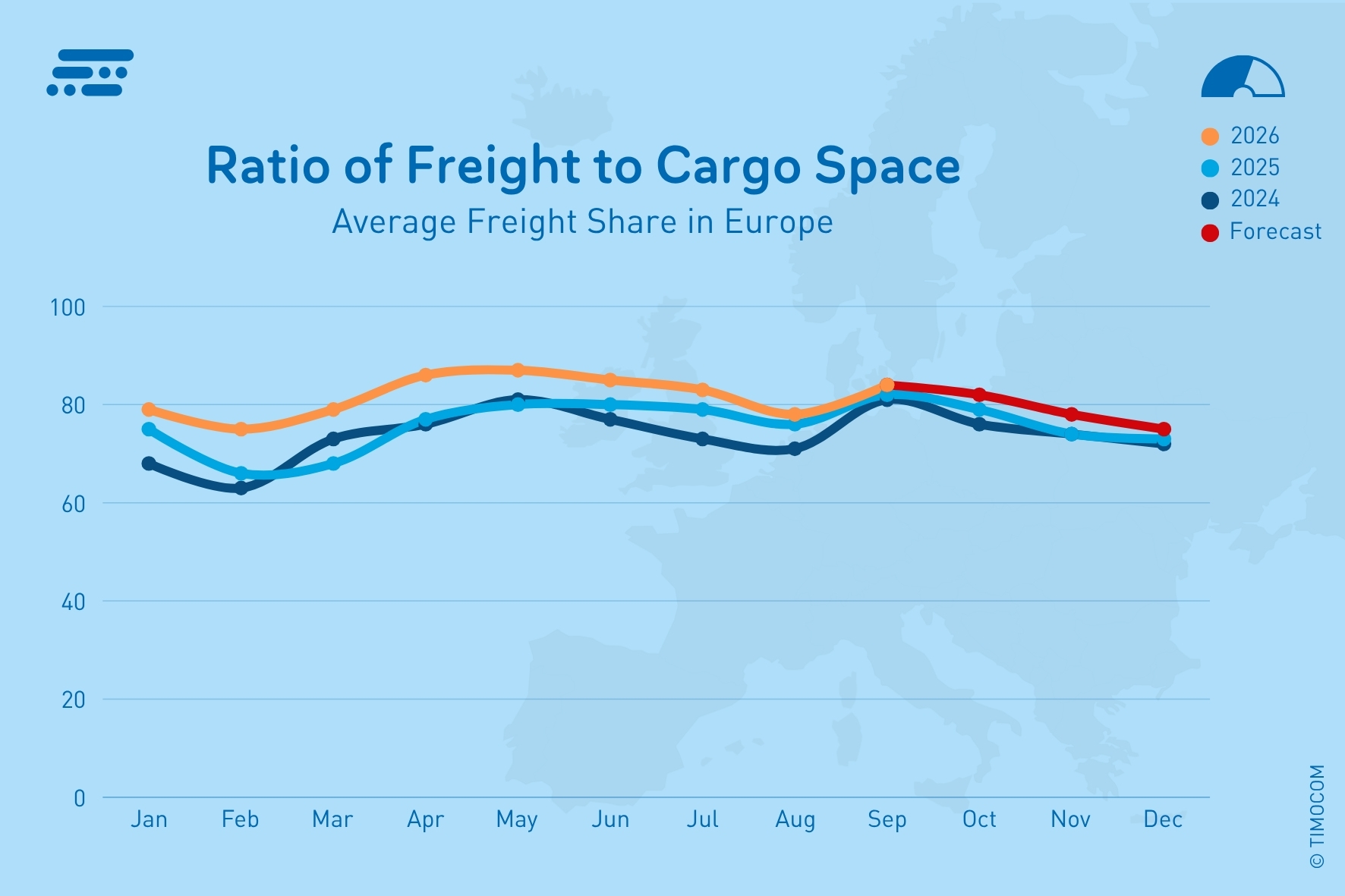
Figure 1: The ratio of freight offers to vehicle space offers year-on-year.
Freight entries in Q3 across Europe were 4.9 per cent above the previous year, but 13.9 per cent below the previous quarter. Vehicle space offers show signs of stabilisation. Diesel prices are rising more sharply than freight rates.
The European spot market also remained characterised by high demand for freight in the third quarter of 2026. Although freight entries in the TIMOCOM Marketplace fell by 13.9 per cent seasonally compared with the strong second quarter, they still remained 4.9 per cent above Q3 2025 across Europe. At the same time, the freight share in the TIMOCOM Transport Barometer fluctuated between 78 and 84 per cent and was above the respective figure for the previous year in all three months. Spot market prices also continued to be higher than a year earlier. High fuel costs and geopolitical uncertainty are therefore meeting a market that is normalising seasonally, without any sign of a fundamental easing.
Would you like to stay up to date with the latest news in road transport? Sign up for the TIMOCOM newsletter.
Growth in freight entries is slowing down
The growth momentum of freight entries slowed significantly over the course of the year. After +40.8 per cent in Q1 and +23.8 per cent in Q2 2026, European freight entries were still 4.9 per cent above the previous year in the third quarter. Within Germany, the increase was 7.6 per cent, and in Austria 11.6 per cent.
Compared with the second quarter of 2026, freight entries across Europe fell seasonally by 13.9 per cent. This meant that the exceptionally strong growth seen in the first half of the year did not continue, but demand in the TIMOCOM Marketplace remained higher than in the previous year.
Freight share above last year's level: the Transport Barometer picks up again at the end of the quarter
The freight share in the TIMOCOM Transport Barometer was above the corresponding figure for the previous year in all three months. In July, it stood at 83 per cent, which was 4 percentage points higher than in July 2025. In August, at 78 per cent, it was 2 percentage points above the previous year. In September, the freight share rose again to 84 per cent, which was also 2 percentage points higher than in September 2025. Following the seasonal slowdown in August, the Transport Barometer picked up noticeably again towards the end of the quarter.
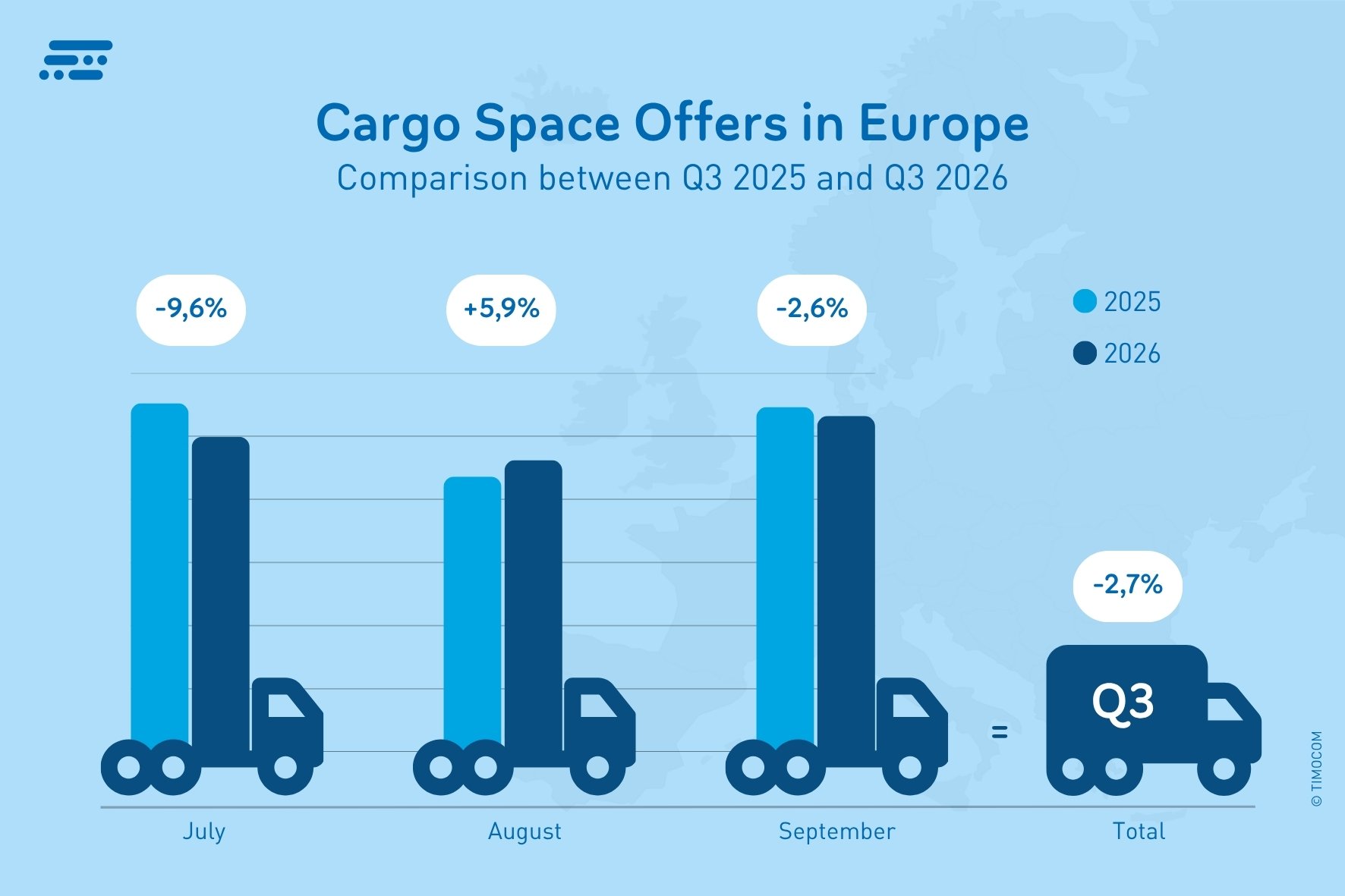
Figure 2: Changes in the vehicle space offers posted on the TIMOCOM freight exchange in the third quarter of 2026.
Vehicle space offers with signs of stabilisation
For the lorries actively posted in the TIMOCOM Marketplace, there are signs of stabilisation compared with the first half of the year. In Q3, vehicle space offers across Europe were 2.7 per cent below the previous year's level, but compared with Q2 2026, 4.8 per cent more lorry offers were posted. This means that vehicle space offers in the TIMOCOM Marketplace rose for the first time in the current year compared to the previous quarter. In the second quarter, the freely reported capacities were still 10.8 per cent below Q2 2025.
“The trend in freely reported HGV capacities does point to stabilisation, but it cannot be described as a turnaround in the trend or even as an easing of the situation on the transport market,” explains Gunnar Gburek, Company Spokesman & Head of Business Affairs at TIMOCOM. “The trend in actively reported vehicle space offers does not mean that additional vehicles have entered the market. Due to the high diesel prices, some hauliers are presumably trying to secure the perfect order – without too many empty kilometres. If they cannot find suitable freight in the offers, they place their available HGV directly in the Marketplace.”
Diesel prices are rising more sharply than freight rates
Cost pressure remains high for hauliers. According to data from the European Commission’s Weekly Oil Bulletin, the average diesel price in Germany in the third quarter of 2026 was 40.7 per cent higher than in Q3 2025. If fuel accounts for around 30 per cent of total transport costs, a diesel price increase of around 40 per cent raises total costs by about 12 per cent in purely mathematical terms.
The rise in spot market prices during the same period was, however, significantly smaller. Within Germany, the average customer prices were 7.0 per cent higher than the previous year, and 6.4 per cent higher across Europe. The price demands of service providers rose by 6.4 per cent in Germany compared with Q3 2025, and by 5.7 per cent on routes across Europe. Calendar week 33 marked the seasonal low in terms of prices in August. Customer prices across Europe fell to an average of €1.50/km. Within Germany, the lower price level was slightly higher at €1.67/km, which may be due, among other things, to the shorter transport distances here, while the Europe-wide figures also include longer cross-border transports.
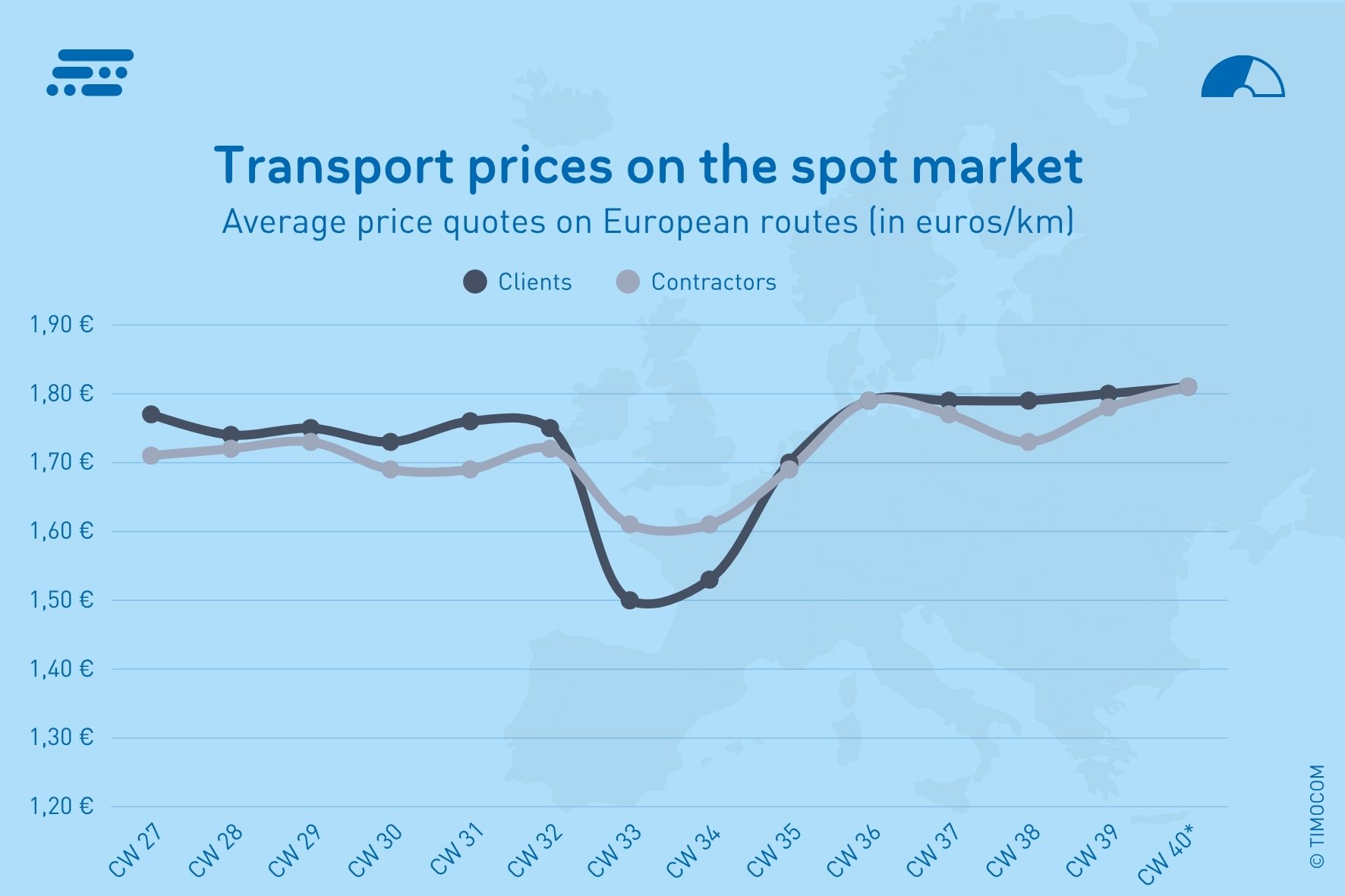
Figure 3: The average transport prices offered by customers and service providers in Europe.
This differing trend makes the additional cost pressure visible. If hauliers cannot offset higher fuel costs through freight rates, diesel surcharges or better capacity utilisation, this comes at the expense of their margins. The rise in diesel prices was not a purely German phenomenon either: average diesel prices were also significantly above Q3 2025 in France (+35.5 per cent), the Czech Republic (+34.2 per cent), Austria (+33.2 per cent) and Poland (+30.1 per cent).
“We are indeed seeing a slight reduction in freight demand compared with the second quarter. However, that does not explain why hauliers are only able to pass on their increased costs to a limited extent. In contract business, short-term price adjustments are rarely possible. On the spot market, on the other hand, in challenging times the focus is often on the additional utilisation of vehicles – even without one hundred per cent cost coverage. However, if the gap between rising costs and prices continues to widen, there is a risk of a further reduction in HGV capacity,” says Gunnar Gburek of TIMOCOM.
Outlook for the fourth quarter: seasonally higher transport demand and high costs
With the end of the holiday season, transport demand picked up again towards the end of the quarter. In the fourth quarter, seasonally higher transport requirements will meet persistently high costs as well as economic and geopolitical uncertainty. As a result, freight offers, available lorries and spot market prices will continue to be characterised by short-term fluctuations. The freight-to-vehicle-space ratio in the TIMOCOM Transport Barometer is expected to be above 80:20 in October and to fall slightly below this level again over the course of the rest of the quarter.
“The development of transport prices will depend directly on the economic situation and diesel prices. Due to structural shortages, the race for available capacity in the Christmas business is likely to pick up pace once again and drive prices up. Towards the end of the year, the curve of the freight share in the Transport Barometer flattens seasonally once the year-end business has largely been completed,” predicts Gunnar Gburek.
More information about the current situation on the transport market and the Transport Barometer can be found at www.timocom.co.uk. Current changes in freight offer figures on selected European routes are also available to interested parties in the TIMOCOM Transport Barometer Report.